Sunday, March 25, 2007

How Not to Write a Job Ad for Advertising Specialties Sales People


I continually scratch my head at the the type of people who write job ads like the one I just came across on Craig's List. I understand this employer wants a keen sales rep to bring in sales. Yes, sales people need to bring in business at the end of the day .... how they achieve this goal is the subject of another discussion.


Customers - run for cover!!! Mr. Alligator Grizzly Bear Ball Buster is out to sell you some pens, flashing baubles and white coffee mugs!! Reject him at your peril!!

------------------------------------------------------------

Ad Specialty Sales $1,000 + wk

Looking to train experienced salespeople to sell Ad-Specialties.

This position is about building your own business within a business.

Successful applicants will learn how to sell all types of Ad Specialty products.
Once you have achieved an income of at least $1,000 per week for six months you will start building your own crew of salespeople. Your income will be limited only by your work ethic and imagination.

-Qualified applicants will be hard working, self-disciplined and goal oriented.
-Be responsible and punctual.
-Want to make as much money as humanly possible.
-Have the hide of an alligator
-Be prepared to rip the hair off the balls of a grizzly bear

WARNING:
Slackers, Liars, Deadbeats and Wimps need not apply.

---------------------------------------------------------------------------------

Saturday, March 17, 2007

The Growth Dilemma

I observe most of my important business lessons when I go to market.

I love farmer's markets as they are filled with such interesting vendors. Most of them are pretty quirky and have strong personalities. It is pretty evident when you are speaking with the owner at one of these places. They are the ones who know what you ordered last week, that your toddler likes poppy seed bagels, who enthusiastically recommend the basil-lemon mustard to go with the sausage you just bought, point out the best head of broccoli, and always cut the ham just the right way. They just get it.

Then you come the next week and the owner is busy serving another client. No problem, except for the fact that the owner's nephew is helping out this week. The nephew does not get it. He reaches for the limp broccoli, fumbles with the credit card machine (or even worse, informs you that you cannot charge $13.11 worth of goods on the card because it contravenes the "no visa under $20 policy"), he slices instead of shaves the ham, and he fails to connect with you about anything. The exchange is a transaction vs an experience.

I return the following week. Again, the owner is swamped with other clients. "Uh oh", the nephew is eyeing me, looking to help. I pretend to continue shopping, all the while hoping that the owner will look up and take my order. No luck, I keep delaying ... keep avoiding the nephew. Eventually, I succeed and I place my order with the owner, the only one who gets it.

This situation is not uncommon in business. A passionate owner, recognizing they can't do it all, hires others to help grow the business. Suddenly, a new person starts answering the phone. Their voice is different, their disposition is different, their product knowledge is different, and they are pretty good at enforcing company policies that you were previously unaware of ... all told, you feel something is missing.

Of course, this is the ultimate challenge. How does a business owner empower the people around them to act like themselves - stamping their DNA onto the people who work with them, so to speak. I know of many amazing businesses that have done this very well, though I know of many others that fail miserably. Unless you are dealing with "Bob the owner", you walk. This is unfair to Bob as he is just too busy ... why won't my clients just deal with the "nephew"?

The companies that nail this concept end up winning. In my experience, training the people around you to "get it" is the most important thing you can do in growing your business. Yes, it is essential that you hire people that have a range of experiences, but if you can't bottle up what is special about your business (and you) and give it to these new hires, you will end up with an uphill battle on your hands.

I speak from experience. Right Sleeve is a very demanding place to work. We are fanatical about delivering a "wow" customer experience and those that do not get this, end up leaving very quickly. Unfortunately, more people end up NOT working out than the ones that do. Why is this? While growth is very important to us, we are not prepared to sacrifice a quality customer experience for anything. All of our staff have to connect with our clients.

If people think and act like this is a product business, their chances for success are limited. This is a people business first and a product business second. Come on - we sell branded promotional products!!! However, what is special about this place is the effect that these products have on the people who order them (making them look good in front of their boss or clients). This is powerful stuff ... and a hard concept to teach.

I feel like we have made some tremendous sacrifices in our quest for the perfect team. While I know deep down inside that we could quadruple overnight if we hired a small army of salespeople, I am not prepared to become the kind of company staffed by too many "nephews" and too few "Bobs". Why? While in the short/medium term, it would be brilliant strategy for growth, I'd pay the price in the long term. (do you think Howard Schultz may have been thinking this when he wrote his "Starbucks is becoming soulless" companywide email in Feb 2007)?

Growth is still very important to us. But it just takes time to find the right people. It takes time to hire them, train them, develop them. Our management team has been around for years and we have highly dedicated, passionate people who take ownership over what they do. These are the kind of people who genuinely say they have fun at work. I know they represent this company as well - if not better - than me.

The ones who don't work out have difficulty understanding the path to success involves patience, training, learning from setbacks, dealing with criticism, listening, and truly caring about their work and the impact it has on others (vendors, colleagues and clients). This is hardly an overnight process.

When done right, everyone acts like "Bob the owner" and the passion permeates the business meaning the experience is never diluted for the customer.

Tuesday, March 13, 2007

The Machine is Us/ing Us

My buddy Scott Annan sent this video my way. While it has already been watched a billion times, I wanted to spread the word even more. This is a fabulous look at the evolution of the web from a unidimensional resource to its current status as a dynamic and collaborative medium.

This is worth the 4 minutes ...

Saturday, March 10, 2007

Fabulous quotes

You know when you come across quotes that make you say "Yes! That's really smart" ... well here goes. They nail the point in such a cool "less is more" kind of way.
-----------

When people are least sure, they are often the most dogmatic (JK Galbraith)

Imagination is more important than knowledge (Albert Einstein)

Coffee is for closers (Alec Baldwin in Glengarry Glenross)

Where there is no vision, people perish (Proverbs 29:18)

Things do not change; we change (Henry David Thoreau)

Until you try, you don't know what you can do (Henry James)

Man cannot discover new oceans until he has courage to lose sight of the shore (Anon)

A crank is a man with a new idea - until it catches on (Mark Twain)

If you do what you've always done, you'll get what you've always gotten (Anon)

Friday, March 09, 2007

Leadership


In my experience, the meaning of leadership is giving your people a voice to express themselves.

The staff we attract enjoy selling our fun/hip/trend setting products to image conscious companies. Working with headstrong, creative, opinionated people can be a challenge. However, giving a group of people like this a voice to express themselves can have extraordinary results.

I have found that giving people a voice is achieved in three ways (i) participation (ii) ownership of ideas and (iii) setting an example
Participation
We have weekly meetings to discuss creative initiatives. These sessions are pretty liberal and open ended. I have found that the more freedom I give people to express themselves, the more creative they are with their ideas.

For example, in a recent session about how we were going to communicate our top sellers to clients, we honed in on the idea of a Staff Top Ten list. In order to give this promotion a little more personality, the team decided it would be fun to showcase ourselves as the style makers behind the products. Fast forward to the creative ... we now have people striking poses in the Number 10 to represent the Top Ten theme so we could capture the meaning of the promotion on our web site.

These exercises are often very random and the energy in the room is unbelievable as it allows members of the team to express themselves as well as feel connected to the overall mission of the company - to deliver a WOW experience to our clients. You can read more about the exercise here.

Ownership

In addition to these creative sessions, I ask each staff member to be a weekly "Learnings Chair" where they moderate a discussion based on a case study of their choosing in their assigned week. This case study may be a chapter from a book, blog post, magazine/newspaper article or podcast. This topic is distributed to all staff a few days in advance.

Each Monday, the appointed staff member will lead a discussion on the top 3 learnings from the case study and how we can apply them to Right Sleeve. The results have been fantastic. Not only does the company learn 3 new things each week, but each staff member is empowered every time they are asked to present in front of their peers. This is much more powerful coming from an employee than it is coming from the boss (people just expect me to say these things)!

Setting an Example
As a leader, I find that the written word gives my ideas more legitimacy. As such, I publish my ideas on our company blog for the world to see. Our company blog is successful because it gives Right Sleeve a human face. I avoid writing about selling our products, rather I use it as a medium to communicate my philosophies on marketing and business in general. I have found the impact of the blog on my staff to be profound as it gives them a forum to discuss and debate the things I publish online (and believe me, they debate them passionately)! They also get the opportunity to look "beneath the hood" and see what makes the owner tick - unfiltered and uncensored. This is powerful as it makes me more accessible as a leader.

While I have made many mistakes in running this business, one of my biggest successes has been giving my staff a say in the process so their sense of ownership increases ... making my job a little easier every day.

Monday, March 05, 2007

Herd mentality


Herd mentality is fascinating.

Have you ever noticed that whenever a plane lands, taxis to the gate, and turns off the seat belt sign that 95% of the passengers instantly jump up, rush to get their bags from the overhead bins ... and then proceed to wait for several minutes (still standing) before the plane's doors open?

Where are they going in such a rush? Is the guy in the seat behind me going to get off the plane faster than me when the doors open? It seems so unfair - he has been standing with bag in hand for 5 minutes while I sit there relaxing (and I still get off before him .... after all, I am still seated ahead of him). It only takes a few seconds to get your bag in the overhead bin. (and yes, I have traveled with my family as well as by myself).

To be clear, I am not a slow poke. I am usually in a hurry, but I just don't get why people rush just to stand there? Why not sit back, relax and wait until the doors open? Then grab your bag and be on your way. Standing in the aisle will not speed anything up, other than just congest the aisle and cause back pain.

Ever since I can remember, people have always rushed to stand after a flight arrives at the gate. It seems somehow ingrained in the traveler's DNA, but it does not seem to affect one's ability to get off the flight any faster. This is just what people do, as though they are following some sort of rule book.

Here's the point. Why do what everyone else does, especially when "what everyone else" does is kind of silly when you step back and really look at the situation?

It's pretty liberating to do things differently - in life, business, etc. Sometimes doing it the way everyone always does it only satisfies our need to be like others, but it is not necessarily the best way.

(author's note - while I may be onto something with this deplaning business, I still engage in many other silly and herd like activities, so I am not playing high and mighty. I still have plenty to learn!)

Tuesday, February 20, 2007

The Power of Core Values


In the past, I was never a believer in committing core values to paper. I always knew they were important, and while we certainly abided by a set of core values in our heads and hearts before, I chalked up the actual "writing of them down" as corporate schlock and rhetoric. Did anyone really care? If any of you have seen Office Space, you know what I mean (i.e., big, grey company asking its people "Is this Good for the Company"?)

I have since parked my skepticism as I found the process of committing tried and true values to paper to be liberating. Someone once told me that you know you have nailed a core value when writing it down gives you goose bumps. I mean, it actually has to mean something in order for it to be that powerful. That changed my perspective immediately. What was it that was so exciting about this place when it was just an idea, 1 phone/desk and no clients? Why did the founder wake up one day and declare "I want to start a company". This is the magic that needs to be encapsulated in your value system (the magic elixir, as it were).

For a look at what guides us at Right Sleeve, click here.

I also found that as a business grows, the founder does not have the time they had before to manage individual staff and guide them through every process, customer issue, sales call etc. It is so much easier if everyone is on the same page from day one. The values of a company end up replacing the boss in many ways. If you ever have a question about how something should be done, don't ask the boss ... consult the values. This is so much more empowering for everyone. No one wants to hear the boss drone on more than he/she already does (I speak from experience)!

This also makes your recruiting process much easier. Not everyone is going to agree with your value structure. Fair enough - pass on these candidates, regardless of their skill set. We ask everyone of our job applicants to study our core values so they can draw upon experiences that show they will be the right fit. We have made many interview mistakes in the past ("can you tell me your greatest weakness?"), but we have found that the whole conversation shifts into reality when you hold up your value system to a candidate and ask them to respond. If they lied in the job interview, you will know within 1 week of them starting on the job (at which point they should be shown the door - for everyone's sake).

The same can be said when you pitch clients. While we always want new business, we make a conscious effort to evaluate our clients and measure them against our set of values. No one wants to work with a client that does not value what you stand for. The same goes for partnering with vendors as well.

All great teams have one thing in common - alignment around a common cause. Committing values to paper is a great process to go through (and I sheepishly apologize to anyone with whom I debated this subject in the past).

Saturday, February 10, 2007

Winterlicious - a squandered marketing opportunity


Winterlicious is a great idea gone wrong.
For the uninitiated, Winterlicious is a restaurant promotion organized by the City of Toronto to encourage people to try new restaurants. Participating establishments will prepare a special prix fixe menu at a substantially reduced price from their regular menu cost.
This is a cool concept as it encourages people to try restaurants they normally would not try, principally due to cost. High end restaurants like Biff's, Canoe, Monsoon open their doors to Winterlicious fans for a select period of time. People come in throngs to enjoy the savings as well as the (supposedly) great food.
Here is the problem. The restaurant often offers a substandard menu so as not to lose money on the Winterlicious promotion. They also reduce the service levels and some will even seat you in a "special" section when you announce that you have a Winterlicious reservation. In one outing, the host looked down his nose at us and said curtly "right this way, we have a wonderful table for you" (it was right by the kitchen door).
The menu is typically the light version of what you would normally get at the restaurant. Cheaper ingredients, smaller portions, slower service, sitting in the kitchen, etc all contribute to the underwhelming experience.
Why do some of the restaurants take these short cuts? I am still a paying customer ... but most importantly, I am a new customer (and like most Winterlicious types, an enthusiastic restaurant goer). I also have 1000 choices in Toronto and I have now selected your restaurant. And now you cheapen the experience for me? My expectations were so high, especially after reading the reviews from the pundits. I was excited!
Here is what I think when I leave:
1. I received poor value for my money, even at the reduced rate (I still dropped $100 incl tax/tip/booze on my meal for two .... not exactly a screaming bargain).
2. I was made to feel like a pauper as a Winterlicious customer (maybe they should hand out dunce hats and special T-shirts - NOT made by rightsleeve.com! - at the door).
3. Service was poor, and even worse if I did not order alcohol with my meal
4. A higher end restaurant like Biff's is not so high end anymore in my mind.
5. I have 1000 choices. The next time I will certainly not go to a place where I received mediocre value for my money, even if I paid a little less. A bad experience is still a bad experience, regardless of what it cost.
If I was a restaurant owner, here is how I would work the math.
1. Recognize that the cost to be an official Winterlicious restaurant is a marketing investment, not a cost.
2. Recognize that the reduced meal cost offered to patrons is also a marketing investment (I mean how much am I really losing? I doubt I am selling the food for less than cost, even at Winterlicious rates).
3. Ratchet up the service levels for my Winterlicious patrons. Give them the best seats, make the food extra special, do something to wow my new clients ... roll out the red carpet in a big way. This is my ONE chance to impress them and keep them interested.
After they leave, are my new clients raving about the experience? When people have an superb experience, especially when they get a deal, people TALK about it to EVERYONE. Conversely, when people have a poor experience, they also TALK about it to EVERYONE - often more so and certainly with more venom. Some people will even go so far as to blog about the poor experience - imagine that! :)
btw - the only restaurant that has impressed me with their great food and service at Winterlicious is the Rosedale Diner (just so you don't think I am excessively crusty)!
Conclusion - businesses that offer coupons, discounts, special promotions to bring new clients in the door have one chance to impress. Why put the B team on when you can really do something amazing to earn a client for the long term? A client who saves 20% off their meal on their first visit will more than make up for this loss in subsequent visits. It all comes down to the lifetime value of a client.
A client who saves 20% and has a bad experience will just spread the word about how underwhelming you are. What a squandered opportunity.

Saturday, January 27, 2007

May Oswald be a mentor to us all


I was reminded of one of my favourite quotes in life when reading through an old travel journal from the mid 90's (before starting Right Sleeve). While on this backpacking trip in Asia, I read voraciously as I was in the right mindset to absorb new ideas. One of the best books I read was Roald Dahl's My Uncle Oswald.
I am a big believer in passion. I know that there are many pragmatic things that get in the way of leading a passionate life ("I have to work at this boring job so I can pay the mortgage", "I would really love to do xyz, but it would be too risky", etc). This is what makes us human - a natural aversion to risk and change.

Any successful person in business, politics, education, and life in general possesses many special attributes. However, without passion for what they do, nothing else really matters. I am not defining success in monetary terms (i.e., a stressed out worker bee who makes $10 million and hates what he/she does is not a successful person). I define it in the joie de vivre sense. If you have passion, everything else comes easily. If you lack passion, the rest is a slog.

Back to Oswald ... the following passage is written from the perspective of Oswald's risk averse nephew:

"I began to realize how important it was to be an enthusiast in life. He taught me that if you are interested in something, no matter what it is, go at it at full speed ahead. Embrace it with both arms, hug it, love it and above all become passionate about it. Lukewarm is no good. Hot is no good either. White hot and passionate is the only thing to be".

From a business sense, look at the most memorable companies in the world (or your neighbourhood) today. Take Starbucks or Google on the world stage or how about the kookie, irreverent local coffee shop in your neighbourhood. A friend of mine, Cam Heaps, started the Steam Whistle brewing company in Toronto because he was (white hot) passionate about beer. The rest is history. He has built a solid business while competing against the monster breweries and the multitude of craft labels in Canada. His passion drives the business day in and day out, against all sorts of odds. Without passion, I shudder to think where Cam would be today.

May Oswald be a mentor to us all.

Saturday, January 20, 2007

The Peameal Incident.


I am a regular shopper at a local farmers market in Toronto called the St Lawrence Market. Every Saturday, the market turns into a bustling exchange similar to what one might encounter in Europe or Asia. People yell, sell, cajole, promote, swear, etc etc. It's great. It is a place where people celebrate the concept of "small is big." The shops are small, but they are big on experience. As Tara Hunt aptly says, the St Lawrence Market is a place where the boutique generation would congregate.

One of the main draws at the market is the famous Peameal Bacon sandwich (see at top). Picture slabs of peameal, some mustard, onions, black pepper, and tomatoes sandwiched between 2 pieces of kaiser bun. The Peameal. Pretty simple.

Almost everyone in the market sells this famous sandwich. Not too much to it, you think ... so why not buy from the cheapest vendor? Well, this is exactly what I did as a market newbie many years ago. I bought from a place called the Sausage King - for about 25% less than the crowded place across the aisle - Paddington's Pump. On account of price, I gravitated to Sausage King (why would I buy the same thing across the aisle for 25% more ... who do they think they are?)

For about 2 years, I put up with surly service, an inconsistent product (sometimes too fatty, sometimes a little cheap on the # of pieces of bacon, sometimes served with a day old bun, sometimes drowning in mustard), the same server who always forgot my order week to week, the same server who could never understand "grapefruit juice" despite it being front and center in their cooler (week after week after week). Despite this, I persisted ... always justifying the mediocre experience by the cost savings.

About 6 months ago, Sausage King raised their prices! Now they were only 10% cheaper than Paddington's, but it pushed me over the edge. How could they? They're not worth it! I bailed. I joined the line at Paddington's. I gave my order to the pot bellied and unshaven proprietor - who was even surlier and scarier than the Sausage King woman. However, he has a charm - much like the Soup Nazi in the Seinfeld episode has charm. He got the order right, gave the right change, and moved us along quickly ... and I loved the way he shouted "PEEAAMEAL" to the kitchen. The Sausage King woman was just plain dreary, and none too swift.

I forked out the extra cash and then gave the condiment order to an efficient assistant who got it right ... without having to ask for clarification 5 times. They also serve grapefruit juice and reach for it as soon as I request it.

The new sandwich is glorious! Worth at least twice the Sausage King offering! It has more meat, the bacon is grilled vs steamed. The kaiser bun is always fresh. The amount of mustard applied is just right. The experience is perfect. What was I thinking before? My 2.5 year son Matty also approves - I can hardly get it to my mouth before he pounces on it.

The lessons?

- When you are good, you can charge a premium, and you should.
- When you are good, you will attract the right customers - the ones who value experience and quality first, not price.
- When you are good, you continue to have line-ups when the inferior cheaper guy across the aisle will be twiddling his/her thumbs (or dealing with the price hagglers).
- When you are good, you don't fake it. If you are surly and efficient, then revel in it. Don't pretend to be something you aren't. Customers will eventually find out and punish you for deceiving them.
- Know what you are good at, focus on it, perfect it and customers will come in throngs.
- When you are NOT SO good, you have nothing else to compete on other than price.

Saturday, January 06, 2007

Top Ten Learnings from 2006


Happy New Year!!

2006 has been a quite a year for learning. I am a big fan of reading, attending conferences and speaking to people much smarter than me. Over the course of 12 months, I have spent some time jotting down the 10 most profound business ideas I have gleaned from others.

1. Embrace simplicity. Make it really easy for your customers. (Google)

2. Focus on the remarkable ("Purple Cow", Seth Godin)

" It is a plea for originality, for passion, guts, and daring. Not just because going through life with passion and guts beats the alternative (which it does), but also because it's the only way to be successful. Today, the one sure way to fail is to be boring. Your one chance for success is to be remarkable."

3. You are only as good as your team (Howard Schultz, Starbucks)

4. Two guiding principles I teach my 2 young sons can also be applied in a business setting:

(i) Respect others
(ii) Be interesting and interested.
[in that order]

I maintain that there is a lot in common between running a business and raising a family. Entrepreneurs, in particular, look at their businesses much in the same way that non-entrepreneurs look at their children. As such, there are similar guiding values that work for both.

(i) In business, we have a responsibility to others, be it to clients, vendors, employees (even the competition!). Without a deep respect for others, the foundation on which you are building your business is shaky at best.

(ii) To stand out, your business must be interesting and unique. You need to challenge the status quo in order to differentiate yourself. Otherwise, you just blend in with the crowd. But there are too many people that are interesting, but lack an interest in others. A business in the 21st century must maintain an interest in the world around them. Too much time looking in the mirror is never a good thing.

5. Give your clients a voice. Consumers are in charge now in way that has not been seen in the past. Web 2.0 has dramatically changed how we do business and interact with companies of all sizes. Feedback and criticism is instantaneous on the web. No one can hide now.

6. Be focused. What do you want to be remembered for?

7. Distribution is the ultimate determinant of a firm's value. He/she who can develop a platform that will engage their audience and attract traffic off/online will win. Just look at how much Google, Yahoo, and News Corp valued distribution when they bought YouTube, flickr and MySpace, respectively.

8. Stand out. Don't be scared to step out of line. Seth Godin drove this home in the Purple Cow.

"So it seems that we face two choices: Either be invisible, uncriticized, anonymous, and safe or take a chance at true greatness, uniqueness, and the Purple Cow"

9. The rewards go to those who can think in the future, not the present. Everything you do should be evaluated by how your decision today will affect the future.

10. Customer experience is everything (Mark Hurst)

Tuesday, December 19, 2006

American Apparel sells out?


Dov Charney's American Apparel is selling out for $382.5 MM (US)! The horror!

This is a watershed moment in the apparel business and one filled with so many ironies and contradictions.

I knew AA from the very beginning (when Dov would produce home made catalogs with even more suggestive photos back in the late 90's). AA's whole business model was based on socially responsible T-shirt manufacturing. Sure, the sex and style thing was important, but no message was more prevalent than the fact that this company cared for its workers in its downtown Los Angeles factory.

Dov railed against the machine from day one. I remember him calling retailers like Guess, Gap etc "assholes" for offshoring their production and paying minimal wages to downtrodden factory workers in Malaysia, etc. He waved his banner proudly and vigorously stuck his middle finger at the Man. In the early days, I did not think his business would fly given the commodity driven nature of the T-shirt industry. His prices were high, stock levels were awful and product quality was a mess.

But eventually, he figured it out and was able to mine a very profitable vein - the socially aware teen market. Sex sold, socially conscious manufacturing sold, Playboy/girl magazine covers on the walls of his stores sold, his sexual harassment suits attracted all sorts of attention ... and ultimately sold. Genius! As Seth Godin would say, American Apparel's Purple Cow was not clothing at all, but the idea of socially responsible clothing manufacturing.

While this was happening, skinny teens/tweens bought boatloads of expensive AA gear from the retail stores. Eventually (and shockingly) conservative corporate groups jumped on the bandwagon as they bought AA gear for their events (disclosure - yes, we partly are responsible for spreading this gospel to the corporate/cool crowd).

Does all of this change with the sale of his company to Endeavor Acquisition Corp? Endeavor has plans to take the company public and also plans to blanket the world with more stores so they can take on the likes of ubiquitous retailer Abercrombie and Fitch. A&F is not known for its socially responsible manufacturing (at least in AA's view). Is this the future of AA? Coming to you soon in America's suburban malls?

This raises an interesting question that all public companies face. Can the original spirit and joie de vivre be maintained when a company is now subject to the pressures of Wall Street and a shareholder base? Shareholders are typically different than customers in that they really only care about returns, profits, dividends etc (socially responsible manufacturing is nice and all, but only when it delivers a profit).

I am sure that Dov and his partners have thought long and hard about this. It would be a shame for them to compromise their core values just for the sake of extra dollars (they are doing pretty well right now at $250MM in sales annually). I am hoping that the craziness of AA continues to thrive and prosper with its new parents.

Thursday, December 14, 2006

Introducing James Graham ...


At 3:30 Tuesday morning (Dec 13), we welcomed James Douglas Graham into the world.

Weighing in at 7lbs/1 oz, he is a beautiful and healthy little guy. Brother Matty has already been to the hospital for an inspection and he gives James the 2 thumbs up. His other brother Jack is at home and can't wait to plant a big lick on James's face when they first meet.

Saturday, December 02, 2006

ma.gnolia


I am certainly not the first one to discover this site ... but ma.gnolia is a fabulous social bookmarking tool that allows users to share bookmarks and tags with one another. What I find interesting and different can now be shared with like minded types across the online community.


Wednesday, November 22, 2006

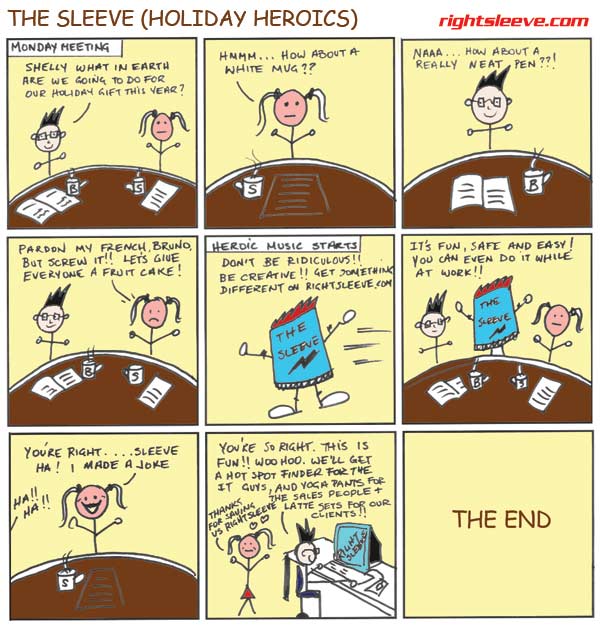
Holiday Heroics! Booo White Mugs!


Ok - so this is a blatant plug for rightsleeve.com, but this is just so cool .... and we think you will enjoy it.
Our creative team's latest holiday email blast is hilarious and really drives home what we stand for in this business - creative ideas and fun stuff that works for creative and fun clients! Calling all creative and fun clients!!
(oops - sorry, if we have offended the white mug crowd, but lighten up will ya?!!)

Friday, November 17, 2006

U3 smart drives - very cool


U3 smart drive technology is starting to gather traction in the market place. This technology (for now) has only been embraced by the early adopter tech crowd.


The concept is simple. U3 drives look like a regular USB flash memory stick BUT they have 1 differentiating feature - they feature software apps (word processing, email, etc software) that can be launched from almost any computer. The idea is that people in the future will only carry around their U3 smart drive and plug it into any computer. Their software apps and files will run from the smart drive. Data on the drive is encrypted so, if lost, security is not an issue. If this takes off, I am sure we will see much fewer laptops being lugged around on business trips.

This is a pretty profound technology and one that will push us further into the mobile computing space.

Read more here

Why is this relevant to our blog? My prediction is that we (and companies like us) will start to see a shift in the corporate gift space as we sell imprinted USB smart drives versus the standard USB flash memory drives that are so ubiquitous today. I give it 6-9 months before we see this shift in the corporate branded merchandise space. You heard it here first!

Thursday, November 02, 2006

Flickr Moo .... Boo!

Here's my beef with buzzy web 2.0 sites. Despite rave reviews from in-the-know web evangelists, they still shaft the customer (on occasion).

Everyone loves these sites as they are community oriented and pro-consumer, but it does not do the consumer much good when transactions don't go through thus souring the overall customer experience. We have a big disconnect here.

So, to my point ... Flickr's buzzy printing site Moo can't seem to get its act together.

Here is what's wrong:

1. I crop every one of my 82 Flickr photos for printing on moo.com (a process that takes about 25 minutes ... but I will chalk this up to a creative 25 minutes so I am not griping). btw - the printable area drag and drop process is counterintuitive, but I figured it out in the end.

2. Proceed to the checkout screen - create an account, input credit card info, click proceed and it tells me my transaction has gone through (i.e., a bill is available for printing), BUT at the same time an error message appears.

3. I fire an email off to client service asking if my order actually went through (hey, this is web 2.0 - where is the IM option, or perhaps the ability to check my online account history). Anyways, client service responds in 2 days and says the order is no where to be found - it must not have gone through. Argh

4. So I try again. I repeat the cropping process (25 minutes of aggravation now - it's no longer fun and creative when doing it the 2nd time).

5. I proceed to the checkout and input my login and password at which point the screen freezes and I am out of luck. All that work for nothing. I quit.

6. Two attempts, 50 wasted minutes of cropping (why is my work not saved?) and no Moo cards.

The conclusion is that while I am all for web 2.0, community interaction, digital commerce and positive consumer experiences ... what's with all the hype when the site just does not work properly? This is fundamental and basic.

Moo - I know you are the current darling of the internet photo printing business, but wake up and make it a little easier for us wee consumers! I just want my cards!

Sunday, October 29, 2006

Even the Enterprise can be fun!

Much has been written about the Enterprise and its inability to embrace the fun and quirkiness of the web 2.0 world. In a nutshell (according to some), the Enterprise = business, boring, grey, soulless cubicles, the "Man", "doesn't get it" etc.

One of the most tireless tiraders (is that a word? Well, you know what I mean) against the enterprise is Tara Hunt - an outspoken marketing rogue (self described) and evangelist for web 2.0 and the power of communities. Tara has some cool things to say and I agree with most of her marketing philosophies (and admire her passion to boot).

Anyways, the enterprise is not all that evil, especially when the office knows how to have a good time making money, returning value to shareholders and other "enterprise-y" things like that. We think we have set an example in this regard.

The quirky people at rightsleeve.com have recently joined the flickr community and hope that other offices across the land will do so as well (a few pioneering companies have already done so before us). Hey "Enterprise", let's lighten up!

Jakers goes viral!


Yehaw - Jakers (the famous rightsleeve.com office mascot) has gone viral.

Click here for a day in the life of Jakers!
Crank those speakers and shake your booty :)


Saturday, October 14, 2006

Office 2.0 Conference, San Francisco


I just spent the last two days (Oct 11-12) at the Office 2.0 conference in San Francisco. I learned about the event from a friend of mine, Mike McDerment, who was speaking at the event about his new web based invoicing application, Freshbooks. This was the enterprise follow-up to the consumer driven Web 2.0 mesh conference held in May 2006 in Toronto. As a web/office 2.0 enthusiast, I was excited to spend time with some of the leading minds of this movement.

This is new territory. There is no consensus on what the future of Office 2.0 will look like, or whether we will ever get there. In many ways, it feels like we are on the brink of something very profound, yet many question marks remain.

The core principle of Office 2.0 revolves around how users collaborate with one another in an enterprise. Sending documents via email is considered "Office 1.0", while working collaboratively with colleagues on the same documents across multiple offices is what the Office 2.0 movement is all about.

Office 2.0 principles are guiding the productivity gains at rightsleeve.com. We have developed a powerful web based solution to power all of our work flow, CRM and supply chain management. It was not an easy process, but we pushed our development team hard to create something that would eliminate the paper flows, increase transparency and ultimately allow our staff to collaborate easily with one another.

Web 2.0 apps will also power the front end of our web business, ultimately benefiting clients. We have always seen our clients as partners in our success. We are looking to the web to connect clients with each other and the products they order – more on this as we roll out the features over the next few months.

Some of the memorable moments of the conference included:

- Attending the conference during the week of two major Google announcements: (i) the You Tube purchase for $1.65BN and (ii) the launch of Google Docs and Spreadsheets

- Being reminded of one of the principal obstacles to widespread Office 2.0 adoption – broadband and connectivity issues. (network issues repeatedly slowed down demo presentations and Gmail even failed once for a stressed out presenter demonstrating a mashup).
- Innovative office 2.0 applications: Joyent, Zoho, Wufoo, SugarCRM, Koral, Genius

- Andrew McAfee’s keynote address on Enterprise 2.0 (he has written what has become the academic standard on this new phenomenon)

- Esther Dyson’s somewhat luke warm endorsement of Office 2.0. I thought it was an interesting way to start a forward thinking web conference with a leading tech advocate who admitted she was more Office 0.9 than Office 2.0 (well, at least she was honest).

I was very impressed with the conference organizer, Ishmael Galimi, who whipped together this conference after evangelizing the concept in his blog earlier in the year. His philosophy (expounded on his blog IT Redux) about the move from desktop installed software to hosted web applications spurred much debate before and during the conference. It was pretty impressive that he and his team were able to assemble such a strong line of speakers and vendors in such a short period of time.